November 19, 2026
How to Cross the Street in Vietnam: The Calm Way to Do It
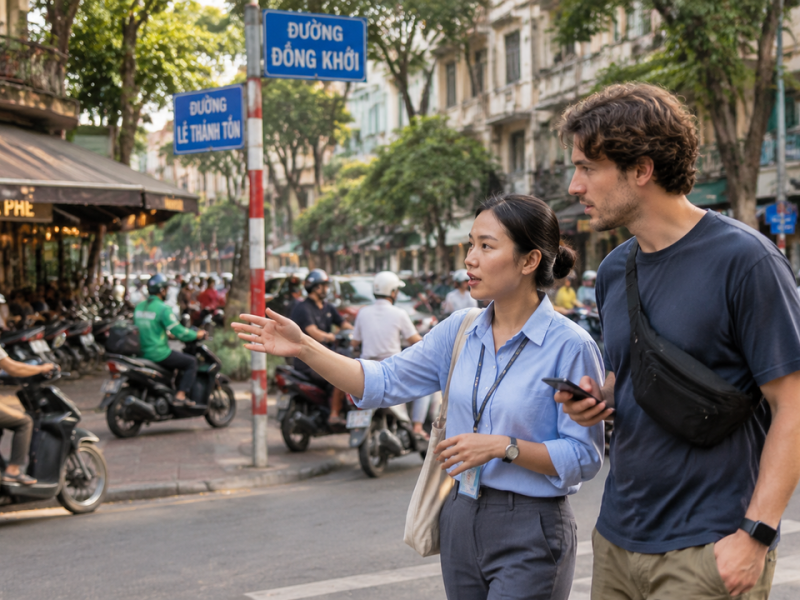
How to cross the street in Vietnam can feel like the first real test of a city visit, with motorbikes, cars, and pedestrians sharing crowded roads. For first-time visitors, Vietnam traffic may seem to flow without gaps, especially in Hanoi or Ho Chi Minh City. The key is not bravery; it is choosing a sensible place and making your movement easy for riders to read.
This calm, practical guide shows you how to choose a crossing point, move predictably, and recognize when waiting is the safer choice. You will learn what to watch for before stepping off and how to stay steady once you begin, so the road feels less intimidating. As you explore beyond the main sights, you can also explore Vietnam with local guides and discover the everyday rhythm of each neighborhood.
What to Know Before You Cross the Street in Vietnam
How to cross the street in Vietnam starts with one rule: be predictable. In busy cities, motorbikes often flow around people, but cars, buses and trucks may not stop. Wait for a gap without large vehicles, then walk at a steady pace while watching the traffic coming toward you.
Before stepping off the curb, check both directions, including on one-way streets. Look for turning scooters, vehicles emerging from side streets and bikes riding against the flow. A brief glance at a nearby rider can help, but keep scanning rather than focusing on one person.
Quick method: Choose a visible crossing point, wait until cars and buses have passed, then cross slowly in a straight line. Do not run, suddenly stop or step backwards. A slightly raised hand can help riders see you, but it does not give you right of way.
| What you see | What to do | Why it matters |
|---|---|---|
| Steady stream of distant motorbikes | Walk slowly and consistently | Your path is easier to anticipate |
| Turning car, bus or truck | Wait for it to pass | Large vehicles cannot weave around you as easily |
For example, if scooters are moving slowly but a taxi is turning across your route, let the taxi clear first. At a wide road or complex junction, use a pedestrian bridge or ask a hotel guard to help you cross. Exploring on foot is part of the adventure; for a local-led introduction to Vietnam, browse Vietnam Crazy Tour options.
Step-by-Step: How to Cross the Street in Vietnam
Quick answer: Choose a visible crossing point, wait for a manageable gap, then walk slowly and steadily in a straight line. Keep scanning rather than focusing on one scooter. Never run, suddenly stop, or step backward once you have entered the road.
1. Choose a clear crossing point
Use a marked crossing or traffic light when available. Otherwise, pick a straight stretch with a clear view in both directions, away from junctions, parked buses, and turning lanes. Pause at the curb and look both ways, including on one-way streets.
A brief glance toward approaching riders can help them notice you, but eye contact is not a guarantee that a vehicle will stop. Wait until cars, buses, and trucks have passed and nearby scooters are moving slowly enough to leave room.
2. Walk at a steady pace
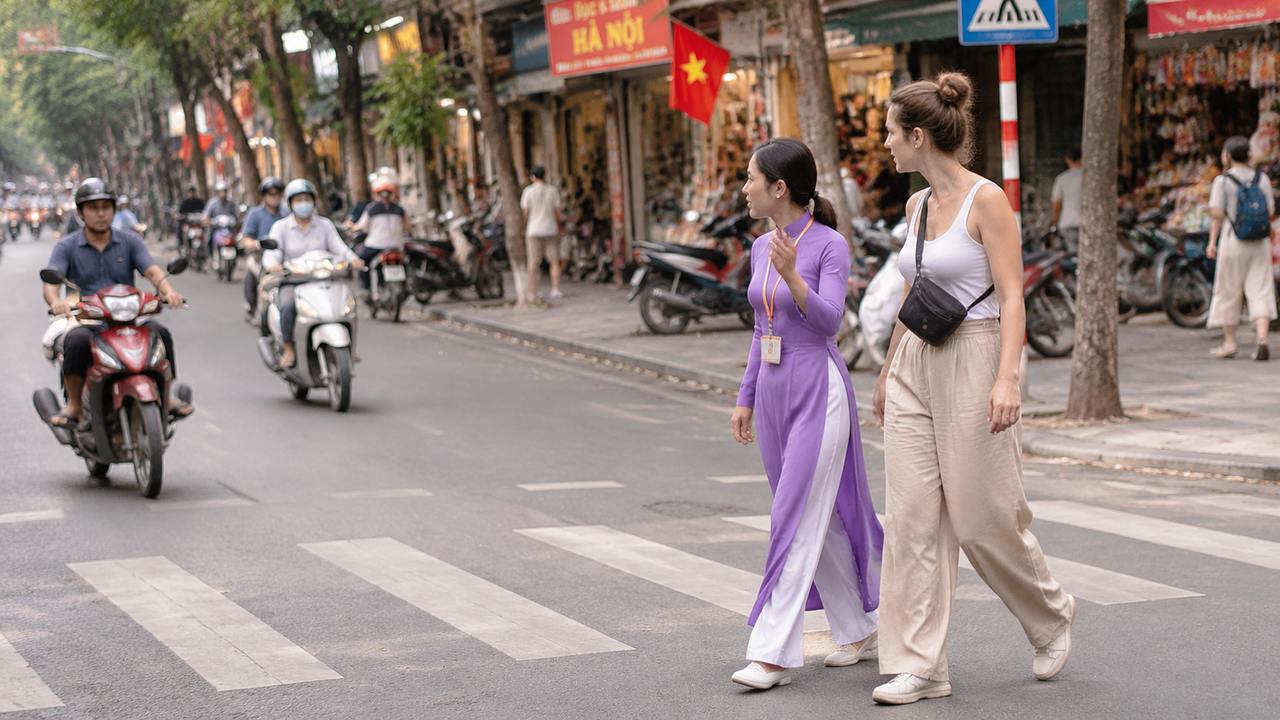
Step out with a calm, even stride and follow one predictable line. Riders often adjust around pedestrians, but they need to anticipate where you will be. Do not weave, hurry to beat a scooter, or change direction halfway through.
If you are exploring local neighborhoods on a Vietnam local tour, watch how residents cross and follow their pace when it is safe to do so.
3. Respond to changing traffic
If a scooter slows, keep your path steady and let the rider pass in front of or behind you. If a vehicle turns across your route, pause at the curb until it clears. Give cars, buses, and trucks extra space; they cannot maneuver around you as easily as scooters can.
| Traffic situation | What to do |
|---|---|
| Scooters approaching | Walk steadily and keep scanning |
| Car or bus turning | Wait until it has passed |
For a first crossing, choose a quieter street and take your time. Ready to explore beyond the main sights? Discover Vietnam Crazy Tour and plan a local adventure with support on the ground.
Where and When to Cross the Street in Vietnam
Quick answer: To cross the street in Vietnam, choose a clear, straight section, wait until no car, bus, or truck is approaching, then walk slowly and predictably. Keep watching both directions, never run or step backward, and use a footbridge or underpass on wide, fast roads.
Choose the crossing and the moment
In Hanoi and Ho Chi Minh City, use pedestrian signals and marked crossings when available, but check the traffic before stepping off. Scooters may turn across your path even when your signal is green, and vehicles do not always stop at zebra crossings.
For a first crossing, pick a straight stretch with good visibility, away from junctions, parked buses, and sharp bends. Mid-morning is often less hectic than rush hour. At a large intersection or roundabout, cross one road at a time rather than cutting through the middle.
When to wait or use another route
On broad roads with fast traffic or a central barrier, take the footbridge or underpass. If the street is narrow, find a point where approaching riders can see you and avoid weaving between parked vehicles. In heavy rain, darkness, or when walking with young children, wait for a safer opening or ask a nearby hotel or restaurant staff member for help.
Once you start, walk at a steady pace in a straight line. Do not run, stop suddenly, or step back. A brief glance at approaching riders helps, but keep scanning the whole road. Exploring with a guide can make unfamiliar local streets easier to navigate; see Vietnam Crazy Tour experiences for ideas.
| Crossing situation | Best choice | Why |
|---|---|---|
| Marked city crossing | Follow the signal and scan traffic | Turning vehicles may still pass |
| Wide arterial road | Use a footbridge or underpass | Traffic is faster and harder to judge |
| Narrow local street | Choose a visible straight section | Riders have more time to see you |
Take your time and choose the safest route, not the shortest one. For a more confident way to discover local neighborhoods, browse Vietnam Crazy Tour trips and plan your next adventure.
How to Adjust Your Crossing Approach to Traffic Conditions
How to cross the street in Vietnam: At a pedestrian signal, wait for the walk light, then check for turning scooters before stepping off. Without a signal, choose a clear, straight crossing point, wait until buses and cars have passed, and walk slowly at a steady pace. Never assume traffic will stop.
Crossing at a signal versus crossing without one
A green pedestrian light gives you a safer starting point, not a guarantee that every lane is clear. Look left, right, and behind for scooters turning across your path, especially near the curb. At an unsignalled crossing, wait for a manageable flow and make your intention clear before moving.
Wide roads, turning lanes, and large vehicles
Cross one road at a time, not diagonally through a junction. Avoid stepping in front of buses, trucks, or cars; they need more room to brake and cannot weave around you like scooters. On a wide boulevard, use an overpass or marked crossing when available. If you are exploring unfamiliar streets, a locally guided city route can help you learn how traffic moves before venturing out solo.
| Situation | Safer approach | Avoid | Extra cue |
|---|---|---|---|
| Signal crossing | Wait for walk light and scan | Trusting the light alone | Watch turning scooters |
| Wide or busy road | Use a marked crossing or bridge | Crossing before a bus | Take one section at a time |
At night, in rain, or with children and luggage
At night, choose lit crossings and give vehicles extra distance; darker streets can mean faster traffic and reduced visibility. In heavy rain, ponchos can hide riders’ mirrors and wet roads lengthen stopping distances, so wait for a lull or take a car if water obscures the curb. Keep children close by the hand, hold luggage on the side away from traffic, and never stop or step backwards once crossing. When conditions feel beyond your comfort level, choose a safer route or ask a local guide for help.
Common Mistakes, FAQs, and Final Safety Tips
Quick answer: To cross the street in Vietnam, wait until cars, buses, and trucks have passed, then walk at a steady pace while watching the whole traffic flow. Do not run, stop suddenly, or step backward. Motorbike riders can adjust around a predictable pedestrian, but larger vehicles need more space and time.
Common mistakes to avoid
Running, looking in only one direction, or following a crowd without checking for traffic can put you in a rider’s path. At a junction, scan both ways even on a one-way street, and wait for large vehicles to clear before stepping out.
- Keep a steady pace and walk in a straight line.
- Put your phone away and keep one hand free.
- Do not assume a zebra crossing means every vehicle will stop.
Frequently asked questions
Do vehicles usually stop for pedestrians? Not always. Motorbikes may slow or steer around you, but cars, buses, and trucks may not stop. Cross only when the gap is safe.
Is it safe to cross alone or with children? Many visitors cross safely by staying calm and alert. Hold a child’s hand firmly on the side away from traffic, and do not let them run ahead.
Should I follow a local? You can cross alongside a local, but do not follow blindly. Check traffic yourself and keep a steady pace.
What if I feel unsure or traffic does not slow down? Wait for another gap, move to a safer crossing, or ask hotel staff to help. There is no need to rush.
| Situation | Safer choice | Avoid | Why |
|---|---|---|---|
| Busy road | Wait beside a crossing | Running into a gap | Drivers need predictable movement |
| Traveling with children | Hold hands and cross together | Letting a child lead | Children are less visible |
Save these step-by-step tips for your next city walk. For an especially busy crossing, ask hotel staff or a local guide for help; you can also explore local guided tours before heading out.