Saigon · October 23, 2026
Ho Chi Minh City Food Guide 2026: What Locals Eat
Ho Chi Minh City food guide seekers usually want the real deal, not a random bucket list of tourist dishes. In Saigon, the challenge is not finding food, it is knowing which stalls, noodle shops, and local favorites are worth your time when the city is moving fast and the menus can feel like a wild ride.
This Ho Chi Minh City food guide makes that easy by focusing on what locals actually eat, how to order without stress, and where to start if you only have a short stay. For a deeper taste of the city beyond food, you can also explore our Saigon food tours and build a trip that feels local from day one.
Featured snippet: Ho Chi Minh City is best explored through its street food, early-morning noodle bowls, and busy neighborhood eateries. Start with banh mi, pho, broken rice, and grilled pork noodles, then follow local crowds in District 1, District 3, and District 5 for the most reliable meals.
| Tiêu chí | Street food | Local restaurant | Best for |
|---|---|---|---|
| Price | Low and casual | Still affordable | Budget travelers |
| Experience | Fast, lively, local | Comfortable, sit-down | First-time visitors |
If you want a smoother start, go early, bring cash, and follow the busiest stall at lunch or breakfast because that is usually the simplest local signal. Midway through your trip, a guided food crawl can save time and remove guesswork, especially if you want hidden spots without the chaos. The strongest meals here are rarely the fanciest ones.
Use this guide as your short list, then eat with confidence, one stall at a time. If you are planning a longer stay or a multi-stop Vietnam itinerary, keep browsing our food tours in Saigon, Da Nang and Hoi An for easy add-ons that fit a food-focused trip.
What Makes the Ho Chi Minh City Food Scene Unique
Ho Chi Minh City food guide travelers usually want one thing first: the real local bite, fast and without tourist polish. Saigon delivers that with street stalls, old family kitchens, late-night seafood rows, and a food rhythm that feels alive from breakfast to midnight. The city is not just a place to eat. It is a place to understand how locals move, order, share, and repeat their favorite dishes every day.
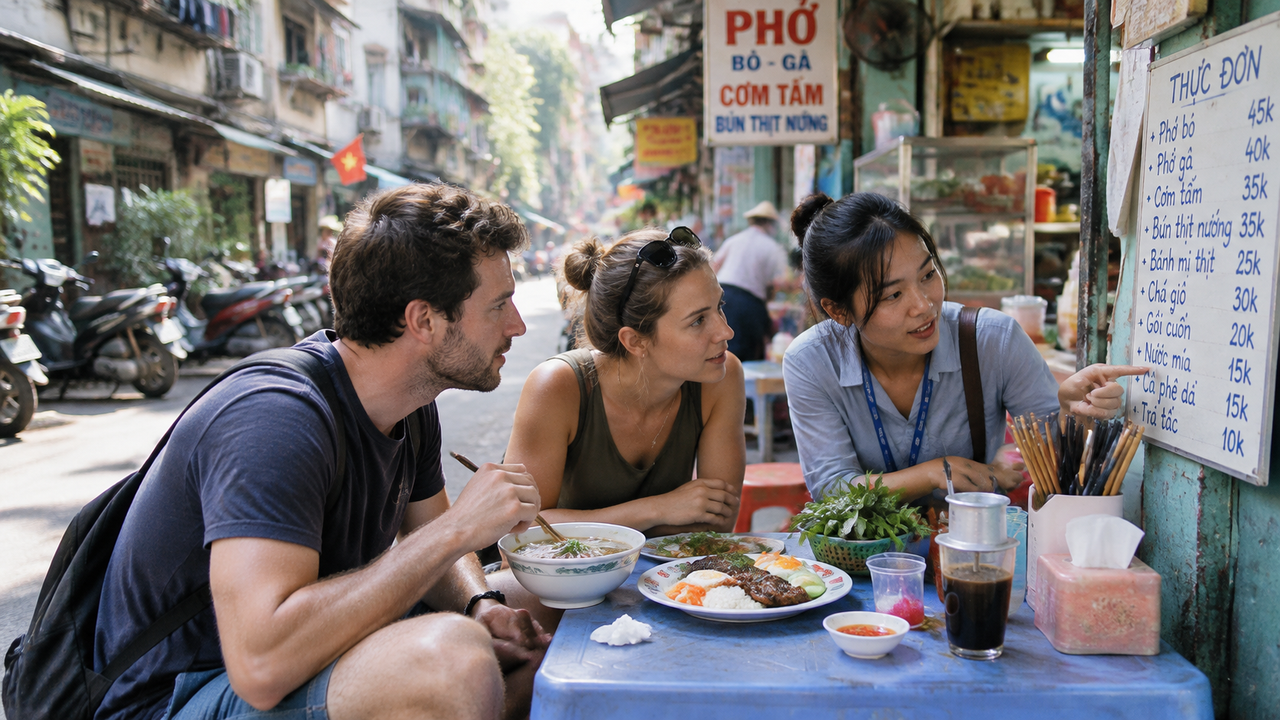
What makes the scene special is the mix. You can eat pho with a sweeter southern broth in the morning, grab a loaded banh mi at noon, then sit on a plastic stool for grilled pork noodles or snails at night. The variety is huge, but the personality stays consistent: bold flavors, quick service, crowded sidewalks, and a strong local identity that still feels welcoming to first-time visitors.
Saigon’s food culture is built on speed, balance, and everyday habit. Locals do not treat eating as a special event only. It is part of the street itself. That is why a tiny alley stall can feel more memorable than a polished restaurant, especially when the cook is working in full view and the queue is mostly office workers, students, or neighborhood regulars. A good example is the way a simple dish like com tam can come with grilled pork, egg, skin, and pickles, yet still taste clean and controlled. The best part is that the city rewards curiosity. A traveler can follow the crowd, trust the smell, and usually end up well. For deeper planning and broader trip ideas, you can browse all Saigon food tour options before you build your food-focused route.
Why is Ho Chi Minh City a major food destination for travelers? Because it offers both consistency and surprise. The famous dishes are easy to find, but the best versions often hide in plain sight, especially in District 1, District 3, and District 5. Here, one street can give you banh mi, pho, broken rice, and seafood within a short walk. That density makes the city ideal for solo travelers, couples, and families who want to sample a lot without wasting time on transport.
| Tiêu chí | Street food | Local restaurant | Tour-friendly stop |
|---|---|---|---|
| Best for | Fast local flavor | Comfort and seating | First-time discovery |
| Typical feel | Busy and casual | More structured | Guided and efficient |
A smart way to experience the city is to mix one signature dish with one spontaneous stop. For example, start with pho in the morning, then do a midday walk for banh mi, and finish with a night snack street where seafood grills over charcoal. That rhythm gives you the real Saigon food feeling, not just a checklist. If you want a low-stress way to explore this energy with local context, a food-led night ride by motorbike can make the first visit easier without making it feel packaged.
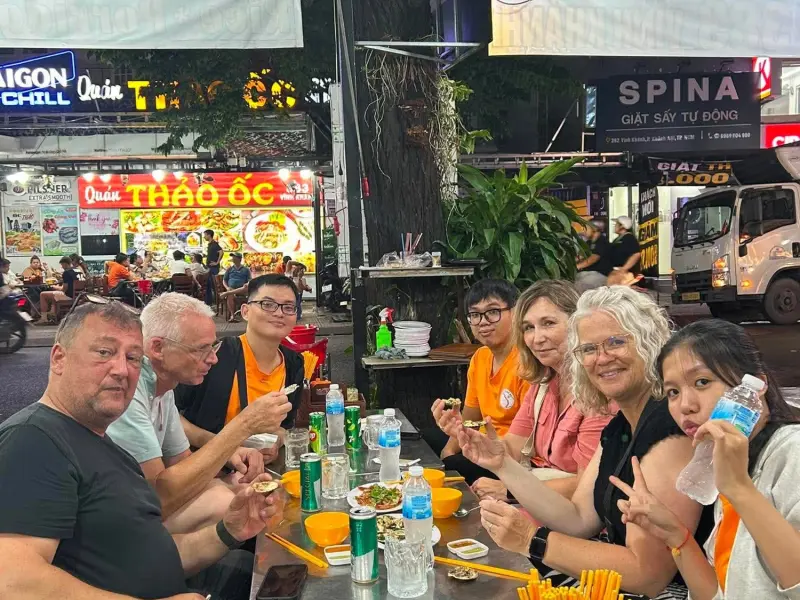
When does the food experience feel most authentic? Early morning and late evening. Morning is when local breakfast culture is strongest, with steam rising from soup pots and commuters eating fast before work. Night is when the city loosens up, tables spill onto sidewalks, and seafood stalls become social spaces. The most authentic spots are usually not the prettiest. They are the ones with worn plastic chairs, busy staff, and a steady flow of local customers who already know what to order. That is the real Ho Chi Minh City food guide logic: follow the crowd, eat where the turnover is high, and let the city show you what it does best.
Best timing and setting often look like this: a 6 to 8 AM breakfast stop, a noon noodle or rice lunch near an office block, and a 7 PM alleyway dinner where the grill smoke and noise do half the work. In Saigon, authenticity is not a performance. It is a habit.
The city becomes most memorable when you stop hunting for perfection and start eating like a local. That means choosing the places with movement, confidence, and no need for a big explanation. If you want to turn that into a trip that feels personal, adventurous, and easy to navigate, the safest next step is to plan around the neighborhoods first, then the dishes, then the timing. That is how you get the full Saigon bite.
For travelers who want the city through food, the strongest strategy is simple: eat early, stay curious, and leave room for one more stop. Ho Chi Minh City rewards those who keep going.
Must-Try Dishes in a Ho Chi Minh City Food Guide
Ho Chi Minh City food guide travelers usually want one thing first: where to eat the local stuff without wasting a meal on weak tourist food. The city is loud, fast, and insanely rewarding if you know what to order, when to order it, and which district does it best. This chapter keeps it simple, local, and ready for real appetite mode.
If you are coming for adventurous eating, Saigon delivers the full street-side chaos in the best way possible. From crisp baguette breakfasts to smoky noodles and late-night seafood, every dish has its own rhythm. The trick is matching the dish to the right area and the right hour, then you get the real flavor, no fake version.
Featured snippet: The must-try dishes in Ho Chi Minh City are banh mi, pho, bun thit nuong, com tam suon nuong, and fresh snail or seafood plates. For the best experience, eat banh mi at breakfast, pho in the morning, grilled noodles at lunch, and seafood at night in District 4 or other busy local streets.
Start with the classics every first-time visitor should eat. Banh mi is the easiest win because it is fast, cheap, and wildly different from place to place. A loaded pork belly version feels rich and messy, while an op la version gives you that morning comfort-food vibe. If you want a safe first bite with local energy, grab a sandwich from a busy stall and eat it standing up beside office workers and delivery riders. That is the Saigon pace.
For noodles, pho and bun thit nuong show two sides of the city. Pho is best early, when the broth is still steaming and the herbs are fresh. Bun thit nuong works well at lunch because the grilled pork, peanuts, herbs, and fish sauce dressing make a full, balanced bowl. If you want a smarter plan for a first-time route, check the city-wide picks on our Saigon food tour list and pair food stops with nearby sights, so you are not zigzagging across town for one meal.
Street food favorites and local specialties are where Saigon gets really fun. Com tam suon nuong is the kind of dish that tells you a lot about the city: broken rice, smoky pork chop, a fried egg if you want extra richness, and a plate that looks simple but hits hard. Snails and seafood are another level, especially in the evening when tables fill up and the grills start smoking. The best stalls are not polished, they are busy, local, and a little chaotic in the right way.
Here is the easy rule by area and meal time. District 1 is strong for classic breakfast and lunch dishes, District 3 is great for serious local noodles and rice plates, and District 4 is the move for seafood after dark. Morning means baguettes, eggs, and pho. Midday means bun thit nuong or com tam. Night means snails, seafood, and a louder table scene. If you want to see how locals pair food with daily life, the city opens up nicely on a daytime street food tour, where food and neighborhood discovery come without the guesswork.
| Criteria | Best Morning Pick | Best Lunch Pick | Best Night Pick |
|---|---|---|---|
| Dish style | Banh mi or pho | Bun thit nuong or com tam | Snails or seafood |
| Best area vibe | District 1 street stalls | District 3 local eateries | District 4 seafood lanes |
The mini insight most travelers miss is that the best dish is often the one eaten at the right hour, not the most famous name on the list. Breakfast banh mi feels brighter before the city heats up. Pho is cleaner and more satisfying before noon. Grilled pork and rice plates land better when you are properly hungry at lunch. Seafood at night feels like a full local event, not just dinner.
So if you want the short version: eat pho early, chase grilled noodles or broken rice for lunch, then save seafood and snails for evening. That timing alone makes a Ho Chi Minh City food guide feel less random and a lot more local. When you are ready to turn that into a real trip instead of just a food wish list, book a Saigon food tour and build the city around the meals you actually want to chase.
How to Explore Ho Chi Minh City Food Like a Local
Ho Chi Minh City food guide planning gets much easier when you stop trying to cover everything in one day. The local rhythm is simple: breakfast early, lunch by the office crowd, dinner after sunset, then a slow snack hunt if you still have energy. That is the real formula for eating like a local, not rushing from one famous spot to another.
If you want the city to feel authentic instead of touristy, build your route around neighborhoods, not just dishes. Choose one food zone, stay flexible, and let the street decide your next bite. That is how solo travelers, couples, and families can enjoy Saigon with less stress and more flavor.
Featured snippet: The easiest way to explore Ho Chi Minh City food like a local is to plan one food cluster per half day, start with an early breakfast, add one lunch stop, then finish with a light dinner or street snack. This keeps travel time low and leaves room for spontaneous finds.
Build a simple food itinerary by matching meal timing with district flow. For example, start in District 3 for breakfast, move to District 1 for lunch, then finish in District 4 for seafood at night. This saves time and gives you the local pace. If you want a smoother first trip, you can also try a food tour by car for a calmer, food-friendly city experience.
Quick planning rules:
– Pick 2 to 3 food stops per day, not 6
– Keep one backup cafe in case a stall is closed
– Use cash for small street stalls
– Arrive early for breakfast and before peak dinner rush
– Walk between nearby spots to absorb the neighborhood energy
| Tiêu chí | Fast food crawl | Local-style crawl | Best for |
|---|---|---|---|
| Travel pace | Rushed and cross-city | Clustered by area | First-time visitors |
| Food experience | Checklist style | More relaxed and authentic | Adventurous travelers |
What to order is usually straightforward, but how you eat matters just as much. At pho shops, add herbs and bean sprouts gradually so the broth stays balanced. With banh mi, hold it over the paper because fillings can spill. At bun thit nuong, mix the noodles, herbs, and sauce before the first bite so the flavors hit together. That tiny move changes the whole meal.
Expect a lively setup rather than polished service. Many local places have plastic stools, shared tables, and short waits during peak hours. That is normal. Some stalls move fast because they know their regulars well, while others are slower but worth it. If you are curious about local culture beyond food, a food and history walking tour can add a deeper layer to your Saigon trip.
Real-life breakfast, lunch, and dinner pattern:
Breakfast: pho or banh mi before 9 AM, when the street is already awake and the broth tastes freshest.
Lunch: bun thit nuong or com tam around noon, when office workers fill the room and the kitchen keeps moving.
Dinner: seafood or snail dishes after 6 PM, when the air cools and tables spill onto the sidewalk.
Mini insight: the best local food experience in Saigon is rarely the fanciest one. It is the place where people are eating quickly, talking loudly, and coming back tomorrow.
If you want a more adventurous way to taste the city, join a guided evening route and let a local lead the order. That removes guesswork and often reveals places you would never find alone. For a softer introduction to that style of travel, try a budget night food ride and see what fits your pace.
Strong CTA: If you are serious about eating Ho Chi Minh City like a local, use this chapter as your daily template and build your route around neighborhoods, meal timing, and one or two signature dishes. That is the smartest way to save energy, eat better, and discover the city with real confidence.
Best Areas to Find Food in Ho Chi Minh City
Ho Chi Minh City food guide travelers usually ask the same question first: where should I eat if I want the real local flavor without wasting time, money, or energy. The city is spread out, and each food zone has a different vibe, price range, and comfort level. If you choose the wrong area, you may end up in a tourist-heavy street when you wanted smoky sidewalk food.
The smart move is to match the neighborhood to your appetite for adventure. District 1 gives you easy access and polished restaurants, District 3 feels more local and balanced, while District 4 and some market areas bring the full chaotic street food energy. For couples, solo travelers, and families, that choice matters more than the dish itself.
Featured snippet: The best food areas in Ho Chi Minh City depend on your goal. Choose District 1 for convenience and first-time ease, District 3 for a stronger local food mix, and District 4 for seafood and late-night street stalls. Markets are best for quick sampling, while restaurant districts are better for comfort and cleaner seating.
Comparing the main food areas is the fastest way to avoid decision fatigue. District 1 is the easiest starting point because menus are often clearer, transport is simple, and most of our Saigon food tours can pick you up there. It is ideal if you want banh mi, pho, and broken rice without needing a full navigation mission.
District 3 is where the food gets more interesting for repeat eaters. Here you will find less polished but more rewarding spots, plus smaller family-run places where locals actually sit down for breakfast or lunch. District 4 leans harder into seafood and snail culture, so it is a better fit for adventurous eaters who do not mind a bit of noise, smoke, and sidewalk energy.
| Tiêu chí | District 1 | District 3 | District 4 |
|---|---|---|---|
| Best for | First-time visitors and convenience | Local favorites and food crawls | Seafood and late-night street food |
| Comfort level | High | Medium | Low to medium |
Pros and cons matter because not every great meal feels easy. District 1 is safe and efficient, but it can feel more commercial and a little less spontaneous. District 3 gives you better local value and more interesting food streets, but some places are crowded and require patience. District 4 is the wild card, especially if you want snails, grilled seafood, and the kind of atmosphere that makes a night feel memorable, not tidy.
If you want a soft entry into the city, start with restaurant districts and then work outward into market lanes. That approach is especially useful for families and couples who want good food without a stress spike. For a deeper local experience, pair your food crawl with an áo dài riders night tour, then use the rest of the evening to eat wherever your guide points you.
How to choose the right spot comes down to three things: budget, timing, and tolerance for chaos. If you are on a tight budget, go where locals queue at lunchtime and skip the fancy seating. If comfort matters, pick air-conditioned restaurants in District 1 or cleaner sit-down places in District 3. If you want pure local energy, hit a market or street-side seafood lane after dark. Solo travelers usually adapt fastest here, while families often do better with daytime lunch spots and lighter dishes like pho or banh mi.
Strong CTA: if you want the easiest first taste of the city without guessing, start in District 1, then move to District 3 for the real upgrade. That one-two move gives you balance, confidence, and a better food story to take home. For travelers who want more than food and enjoy meaningful local culture, combine your meal plan with an egg coffee workshop and cooking class or a hands-on local route for a fuller Ho Chi Minh City experience.
Ho Chi Minh City Food Guide Tips, Mistakes, and FAQs
Ho Chi Minh City food guide travelers need most is not about chasing the fanciest places. It is about eating smart, choosing busy stalls, and knowing what to order first so you can enjoy Saigon like a local without the stress. In this city, the best meals often come from tiny tables, fast-moving kitchens, and one very simple rule: follow the crowd that eats here every day.
If you are a first-time visitor, solo traveler, couple, or family planning a more local food route, the biggest win is to stay curious but practical. Start with one dish, one stall, and one neighborhood at a time. That is how you avoid wasted meals, overpriced traps, and weak travel days. For a deeper street-level experience, some travelers also mix food stops with a Saigon must-eats tour that shows how Saigon actually eats.
Common mistakes travelers make when eating in Saigon
The most common mistake is thinking every popular place must be the best. In reality, some of the most rewarding spots look ordinary, especially on a busy sidewalk in District 1 or District 3. Another mistake is ordering too much too fast, which kills your appetite before the second stop. A smarter move is to split portions and build a mini crawl around one area. That keeps your day flexible and your stomach happy.
Featured snippet: The biggest Saigon food mistakes are eating at empty stalls, ignoring local meal times, and trying too many dishes in one sitting. Choose busy places, go early for breakfast items, and order one signature dish first. If the stall is crowded with locals, the odds are usually in your favor.
| Criteria | Better Choice | Avoid | Why It Matters |
|---|---|---|---|
| Street stall traffic | Busy local crowd | Completely empty shop | High turnover usually means fresher food |
| First dish | Banh mi or pho | Too many dishes at once | Easy starter, low risk, fast to compare |
A practical mini insight: many travelers underestimate breakfast culture in Saigon. Some of the best bowls and sandwiches disappear early, so a late start can mean missing the most authentic experience. If you want a soft, easy way to begin, plan your first stop around morning markets or a breakfast noodle shop, then keep lunch lighter. That rhythm makes the day feel relaxed instead of rushed.
FAQ: Is street food safe, what should you try first, and how much should you budget?
Street food in Saigon is generally safe when you choose high-turnover stalls, eat food that is cooked fresh, and avoid anything that has been sitting in the heat too long. The safest first bites are banh mi, pho, and bun thit nuong because they are made to order and easy to judge visually. If a place is packed with locals, has clean utensils, and moves food quickly, that is a strong sign.
For budget, most travelers can eat very well on a modest daily spend. A simple street meal may cost only a few dollars, while a fuller food day with multiple stops stays affordable compared with many major cities. One smart strategy is to use your first meal to set your price baseline, then adjust from there. If you want to experience more than just eating, you can pair your food route with a food and sightseeing day that keeps things easy and real.
What should you try first? Start with one classic and one bold choice. A classic gives you context, while the bold dish gives you a local surprise. Think banh mi for a fast intro, then a richer bowl of pho or a grilled pork noodle plate. If you travel with family or a nervous eater, begin with the mildest option and move up later. The point is not to eat everything. The point is to taste Saigon with confidence, one local meal at a time.
Soft CTA: plan your food route before you arrive, then keep your first day simple. Pick one breakfast stop, one lunch stop, and one snack stop, all within the same district if possible. That is the easiest way to enjoy Saigon without decision fatigue.
Strong CTA: if you want the real Saigon food rhythm, do not overplan it. Start with one local meal, follow the busiest stall you can find, and let the city lead the rest of the day. That is how a good food trip turns into a great one.