Saigon · November 7, 2026
Haunted Places in Saigon: The Stories Behind the Shadows
Haunted Places in Saigon: Legends, History, and Visits
Haunted places in Saigon draw curious travelers into stories where documented history and neighborhood legend can be difficult to separate. A shadow in an old corridor may make a gripping tale, but it is not proof of a haunting. For visitors seeking local adventure, the more rewarding approach is to understand what is known, what is repeated as folklore, and what can responsibly be explored today.
This guide introduces eerie locations and the stories attached to them, from historic buildings to sites shaped by tragedy and changing city life. It also offers practical ways to check a place’s background and current access before setting out, since some properties are private, altered, or no longer open to visitors. For a cultural perspective on local spiritual traditions, explore Saigon ghost culture as part of your trip planning.
What the Haunted Places in Saigon Reveal About Local Folklore
Haunted places in Saigon are best understood through local stories and beliefs, not as sites with verified paranormal activity. For visitors, that distinction makes an eerie walk more rewarding: the city’s legends offer a way to notice how memory, spiritual traditions, and rapid urban change meet on the same street.
A tale may follow an old building long after its original use has changed, while nearby residents remember a different version. Exploring with curiosity and respect helps travelers enjoy the atmosphere without mistaking rumor for documented history.
How Ghost Stories Become Part of a City’s Identity
Ghost stories travel through family conversations, neighborhood talk, and retellings by students, drivers, and shopkeepers. Each storyteller may add a detail or leave one out. A familiar setting, such as a former residence or an aging apartment block, gives the story a physical anchor as Saigon’s skyline changes around it.
For a curious visitor, the useful question is not only whether a ghost appeared, but why people keep telling the story. It can preserve grief, caution, or a sense of place. A ghost and belief culture tour can add context while keeping folklore distinct from fact.
History, Rumor, and Evidence
Separate a location’s documented past from supernatural claims. Dates, building records, and reported events may be checked; sightings and unexplained sounds usually belong to oral accounts, and versions can differ.
Quick guide: Folklore explains what a community remembers and imagines; it does not prove paranormal activity. Check records for history, and treat ghost encounters as local belief.
| What you hear | How to read it | Visitor takeaway |
|---|---|---|
| Building history | Checkable records | Useful context |
| Ghost encounter | Popular retelling | Folklore, not proof |
Want to explore Saigon’s less familiar stories with a local perspective? Explore Vietnam Crazy Tour options and choose an experience that suits your pace.
The Most Talked-About Haunted Places in Saigon
Haunted places in Saigon are best explored as a mix of local folklore, striking architecture, and the city’s layered history. For visitors, the key is knowing what is documented, what is a story passed between generations, and how to experience these places respectfully.
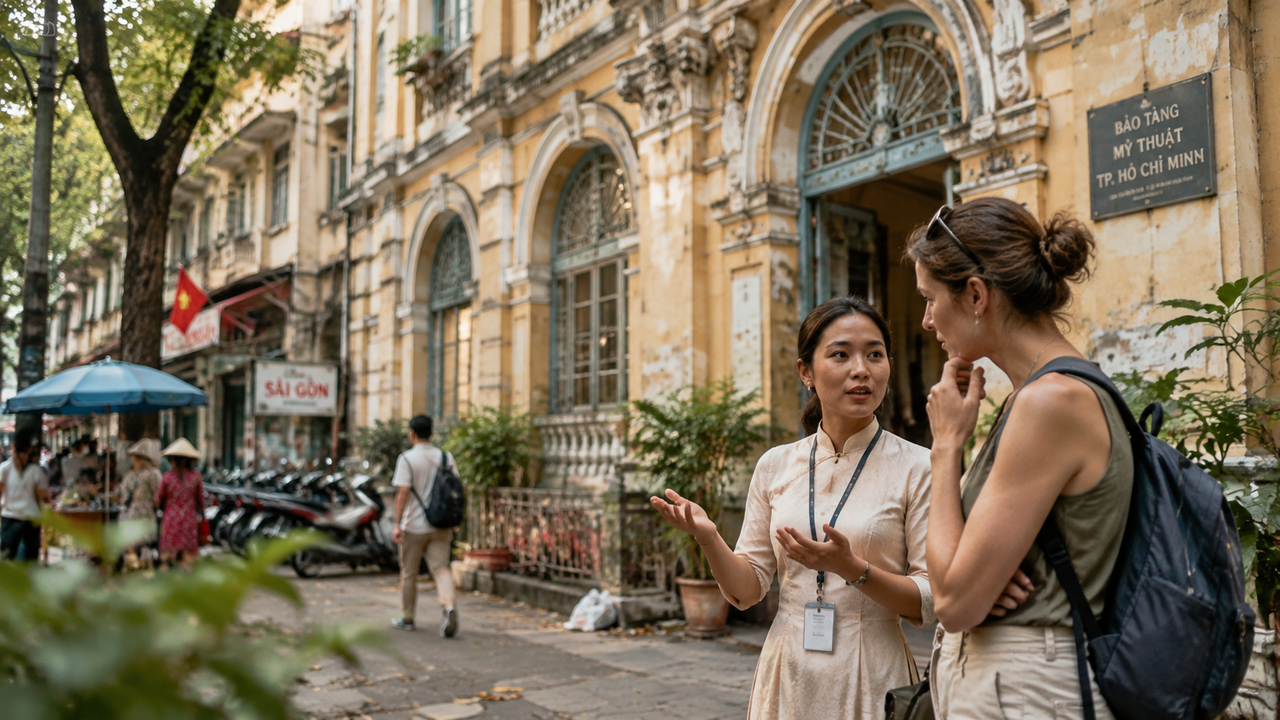
Two names come up often: the former Hui Bon Hoa Mansion, now home to the Ho Chi Minh City Museum of Fine Arts, and Tao Dan Park, where stories gather around old trees and quiet paths. Neither location offers proof of anything supernatural, but both reveal how memory gives familiar city spaces an eerie edge.
Hui Bon Hoa Mansion and the House of 100 Doors
The mansion at 97 Pho Duc Chinh Street is a real historic building and a functioning art museum. Its best-known ghost story tells of a daughter who died young and whose spirit was said to linger in the house. Versions differ, and the title House of 100 Doors is part of the legend, not a verified architectural description.
Look for its grand staircases, patterned floors, and balconies during museum opening hours. The building’s atmosphere is compelling even without treating rumor as fact.
Tao Dan Park and Stories Attached to Old Places
Tao Dan Park is often linked with reports of an unseen presence, especially in retellings about its quieter corners after dark. Such accounts are folklore, not confirmed events. Across Saigon, old homes, former cemeteries, and rapidly changing neighborhoods can become settings for ghost stories: a changed streetscape leaves memories behind, while shadows and unfamiliar sounds invite interpretation.
For a considerate visit, go during public hours, stay on accessible paths, and avoid disturbing residents or memorial spaces. Travelers curious about local beliefs can explore them through a ghost and beliefs tour, where cultural context matters as much as the spooky tale.
At a glance: The mansion offers documented heritage and museum exhibits; Tao Dan Park offers a public green space associated with local stories. Treat supernatural accounts as folklore, check access before visiting, and keep expectations grounded.
| Place | What is documented | What belongs to folklore | Best for |
|---|---|---|---|
| Hui Bon Hoa Mansion | Fine Arts Museum in a historic mansion | The spirit and House of 100 Doors stories | Architecture and art |
| Tao Dan Park | Public park with paths and mature trees | Reports of an unseen presence | A quiet city walk |
Want the stories with local context rather than guesswork? Explore Vietnam Crazy Tour and choose a guided experience that fits your pace, whether you are traveling solo, as a couple, or with family.
The History and Cultural Meaning Behind Saigon’s Ghost Legends
Haunted places in Saigon are compelling not because every ghost story can be verified, but because the stories attach emotion to buildings, cemeteries, and changing neighborhoods. For curious travelers, separating documented history from local folklore makes an adventurous visit more respectful and far more revealing.
In a fast-changing city, an old facade or a site remembered through tragedy can become a meeting point for memory and rumor. Treat each tale as cultural context, not proof of supernatural events, and you can explore with curiosity without repeating unverified claims as fact.
Colonial-Era Buildings, Cemeteries, and Urban Change
Age and architecture shape atmosphere: narrow corridors, shaded courtyards, and weathered facades invite questions, while cemeteries carry visible ties to family remembrance and spiritual practice. A building’s reputation may also grow after a fire, a death, or years of vacancy. Redevelopment can deepen that feeling as familiar landmarks disappear and stories outlast the structures themselves.
- Documented context: dates, former uses, ownership, and recorded events.
- Folklore: stories shared by residents, students, or visitors, often with different versions.
- Urban change: demolition, restoration, or restricted access that alters how people encounter a place.
A useful rule for haunted places in Saigon is to keep these layers distinct. A ghost story can reveal what a community remembers, even when it cannot establish what happened.
How to Research a Haunted Place
To research a haunted place responsibly: check the site’s or museum’s historical records, look for reputable local reporting, and compare multiple accounts. Note which details are documented and which come from oral tradition; do not present a repeated rumor as confirmed history.
| What you find | How to read it | Best next step |
|---|---|---|
| Museum or site record | Useful for dates and documented uses | Cross-check names and timeline |
| Local ghost account | Folklore, not historical proof | Compare sources and label it clearly |
Want to hear how belief and place connect in local life? Explore the Ghost and Beliefs tour with an open mind, respect for residents, and permission before photographing people or private property. For a guided way to discover Saigon’s lesser-known stories, browse Vietnam Crazy Tour experiences.
How to Visit Haunted Places in Saigon Respectfully
Haunted places in Saigon are best explored as places with living communities and layered histories, not as sets for a ghost-hunting stunt. Choose a public site or a respectful folklore walk, check access before you go, and never enter an abandoned building, home, school, cemetery, or religious space without permission.
A daytime museum visit offers architecture and documented history; a guided neighborhood walk can add local beliefs and context. If you want stories without treating residents as attractions, consider a folklore-focused ghost walk with a guide who explains what is known, what is legend, and where visitors may go.
Choose Between a Museum Visit and a Folklore Walk
Use this quick comparison to match the experience to your group and comfort level.
| Option | Best for | What to check | Visit style |
|---|---|---|---|
| Historic museum | Families and first-time visitors | Hours and ticket rules | Daytime, self-paced |
| Guided folklore walk | Solo travelers and curious couples | Route, group size, and permissions | Story-led, neighborhood-based |
Quick answer: For a respectful visit, choose a publicly accessible museum for a daytime history stop or a guided walk for local folklore. Confirm opening hours and route access, follow staff instructions, ask before photographing people, and keep voices low near homes, places of worship, and memorials.
Check Opening Hours, Access, and Local Rules
Details can change, and a building mentioned in an urban legend may be privately owned, closed, or demolished. Verify current opening information with the venue or tour operator rather than relying on old articles or map pins. Do not climb fences, enter vacant properties, leave offerings, or disturb graves.
For a more locally grounded outing, browse Vietnam Crazy Tour experiences and confirm the route before booking. Respectful curiosity makes the stories richer for visitors and safer for the people who call these neighborhoods home.
Haunted Places in Saigon: Safety Tips and FAQs
Haunted places in Saigon are best explored as part of the city’s living history, not as guaranteed paranormal attractions. Stories around old buildings can be compelling, but access, opening hours, and local rules change. A little planning helps you avoid trespassing, protect residents’ privacy, and still enjoy the folklore respectfully.
Common Mistakes to Avoid
- Do not present a ghost story as proven history. Treat it as local folklore unless reliable records confirm the details.
- Never enter a locked, derelict, or privately owned property, even if a doorway appears open. Hui Bon Hoa Mansion, now the Ho Chi Minh City Fine Arts Museum, should be visited only during its official public hours and under its current visitor rules.
- Avoid photographing residents, security staff, worshippers, or memorials without permission. A quiet street is still someone’s home, not a film set.
Quick answer: Saigon’s haunted-site stories are legends, not verified evidence of ghosts. Visit accessible places during official hours, check current access before travelling, and do not enter closed properties. Night visits are not automatically permitted or safer; choose a legal, well-lit route and respect residents, staff, and memorial spaces.
Frequently Asked Questions and Next Steps
Are these places proven to be haunted? No. Stories reflect folklore and rumor; paranormal claims are not established fact.
Can visitors enter Hui Bon Hoa Mansion? The former mansion houses the Fine Arts Museum. Check the museum’s current hours and entry conditions before going; access to restricted rooms is not allowed.
Are the sites suitable for a night visit? Only if the location is open and night access is explicitly allowed. Do not approach closed buildings after dark.
How can travelers verify current status? Check official venue channels shortly before departure, then confirm locally if details are unclear. For cultural context without trespassing, consider a ghost and beliefs tour with a guide. Let curiosity lead, while leaving the city’s people and places undisturbed.
| Visitor question | Safe approach |
|---|---|
| Museum visit | Confirm official hours and follow staff instructions |
| Abandoned property | Stay outside and do not cross barriers |